
CREEP
Building a resilient and sustainable food system in Nordic regions
Introduction
CREEP aims to identify emerging challenges in food systems before they develop into major crises. By detecting early warning signs and understanding how these risks evolve, the project will develop strategies to help prevent or mitigate their impacts.
Many food system challenges emerge gradually and receive too little attention until they become difficult and costly to address. By improving our ability to anticipate and respond to these "creeping crises", CREEP seeks to strengthen the resilience of food systems and support more effective decision-making.
The project focuses on Northern Europe, with case studies and research activities carried out in Finland, Norway, and Sweden.



Creeping crises, food systems
2026-2029
Background
Today's food systems face a range of interconnected challenges. Intensive agricultural production places increasing pressure on natural resources, global supply chains are vulnerable to disruptions, market concentration can create power imbalances, and reliance on fossil fuels contributes to climate change. Many of these problems develop gradually and remain largely hidden within the structures and rules that shape our food systems.
Over time, these "creeping crises" can weaken the resilience of food systems, making them less able to cope with shocks and continue providing affordable, nutritious food. By identifying early warning signs and anticipating emerging risks, it becomes possible to take action before these challenges escalate into major crises, helping food systems adapt and transition towards a more resilient future.
What we do
Investigations on following topics:
What is a creeping crisis?
What are the power dynamics, economies, narratives and policies underlying food system lock-ins?
What are current emerging crises, their foreshadowing events and systems dynamics?
Which kinds of pathways and measures foster transformations toward more resilient food systems?
Expected impact on food system transformation
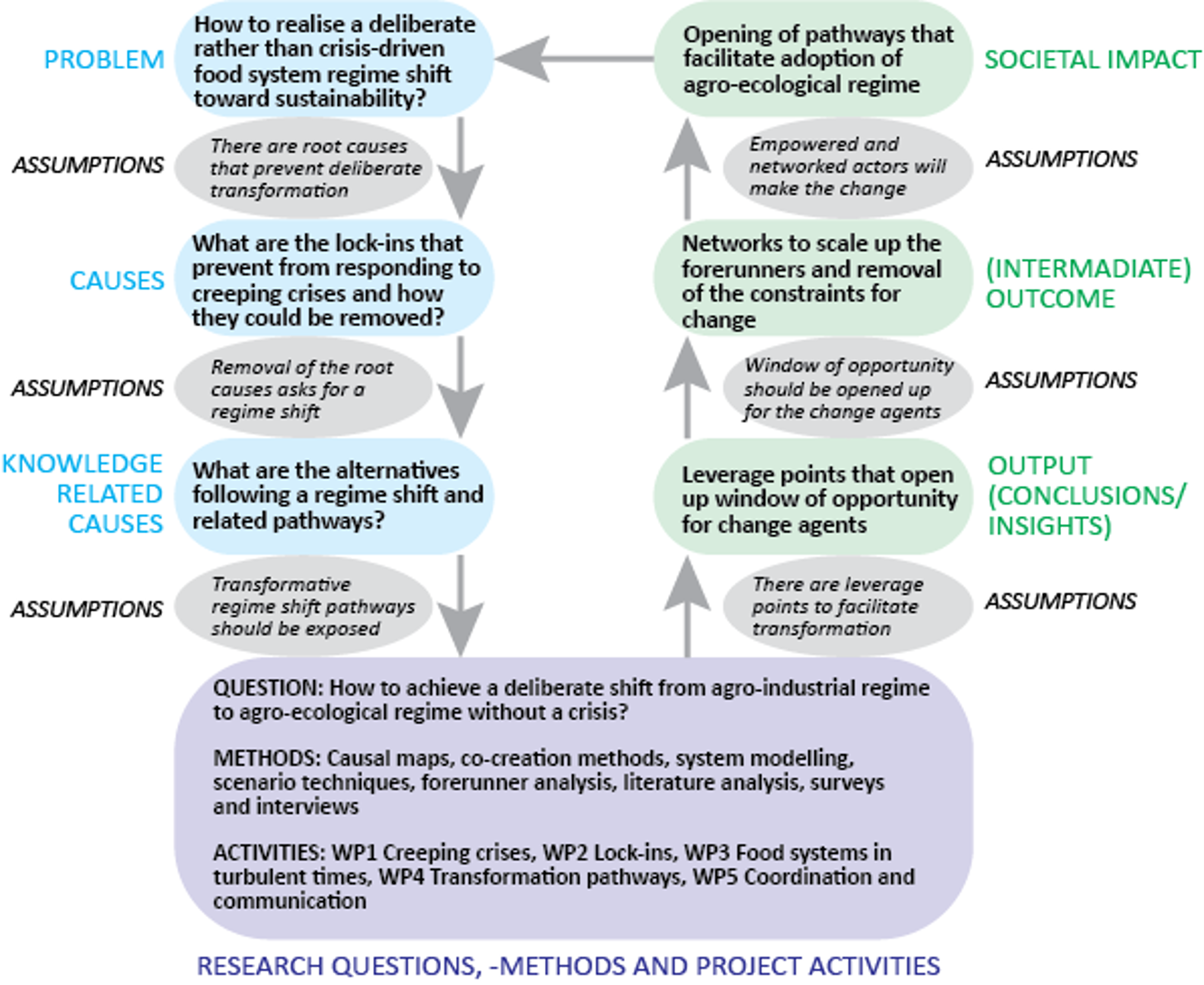
CREEP project will facilitate deliberate change through empowerment and scaling up niche level actors and activities. Also through relaxing constraints and lock-ins that prevent transformation.
The following figure visualises the strategy based on theory of change.
Implementation and plans to reach target groups
The project has developed a dissemination, exploitation, and communication (DEC) plan including key target groups (industry, scientific community, consumers, and authorities/policy makers), and means for communicating and maximizing impact from interaction with each of these groups. The main objectives of this work will be to ensure open and high-impact dissemination of data, transfer of knowledge and methodology to industry, inclusion of the public in outreach and co-creation activities, and input to new policies related to sustainable food production.

Partners of the project
-
Tuomas Kuhmonen, Finland Futures Research Centre, University of Turku, Finland,
Mail: tuomas.kuhmonen@utu.fi
-
Wageningen Food & Biobased Research,
Fraunhofer IVV,
Politecnico di Torino, Wunderfish GmbH,
Lofoten Seaweed Company,
European Seaweed Association (associated partner)
-
National authorities in Finland, Sweden and Norway as well as FutureFoods (EU)
-