
All events
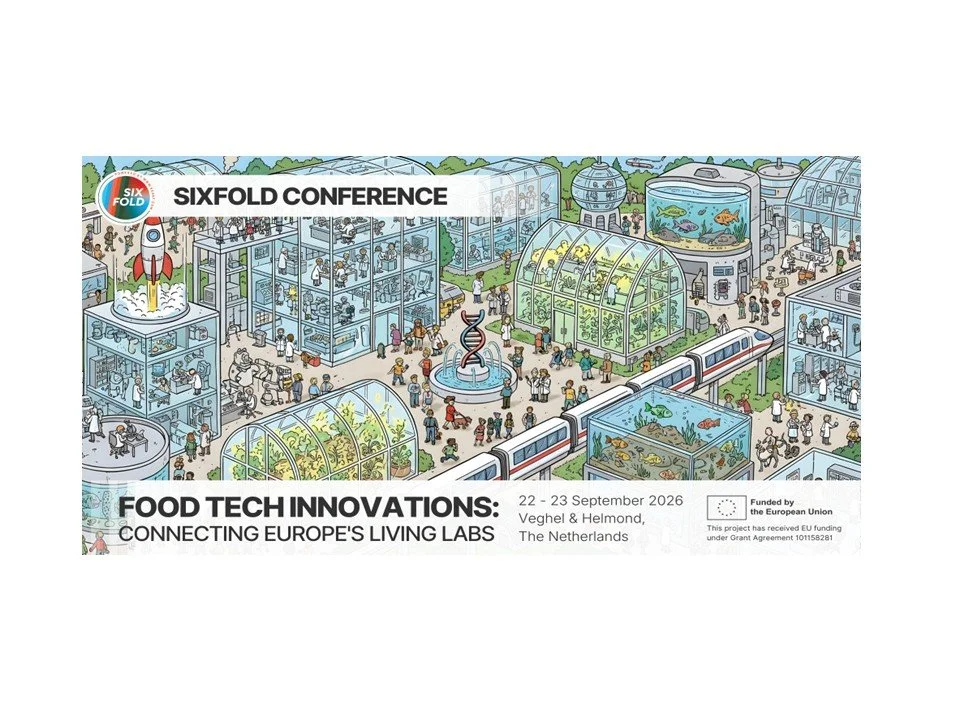
Food Tech Innovations: Connecting Europe's Living Labs
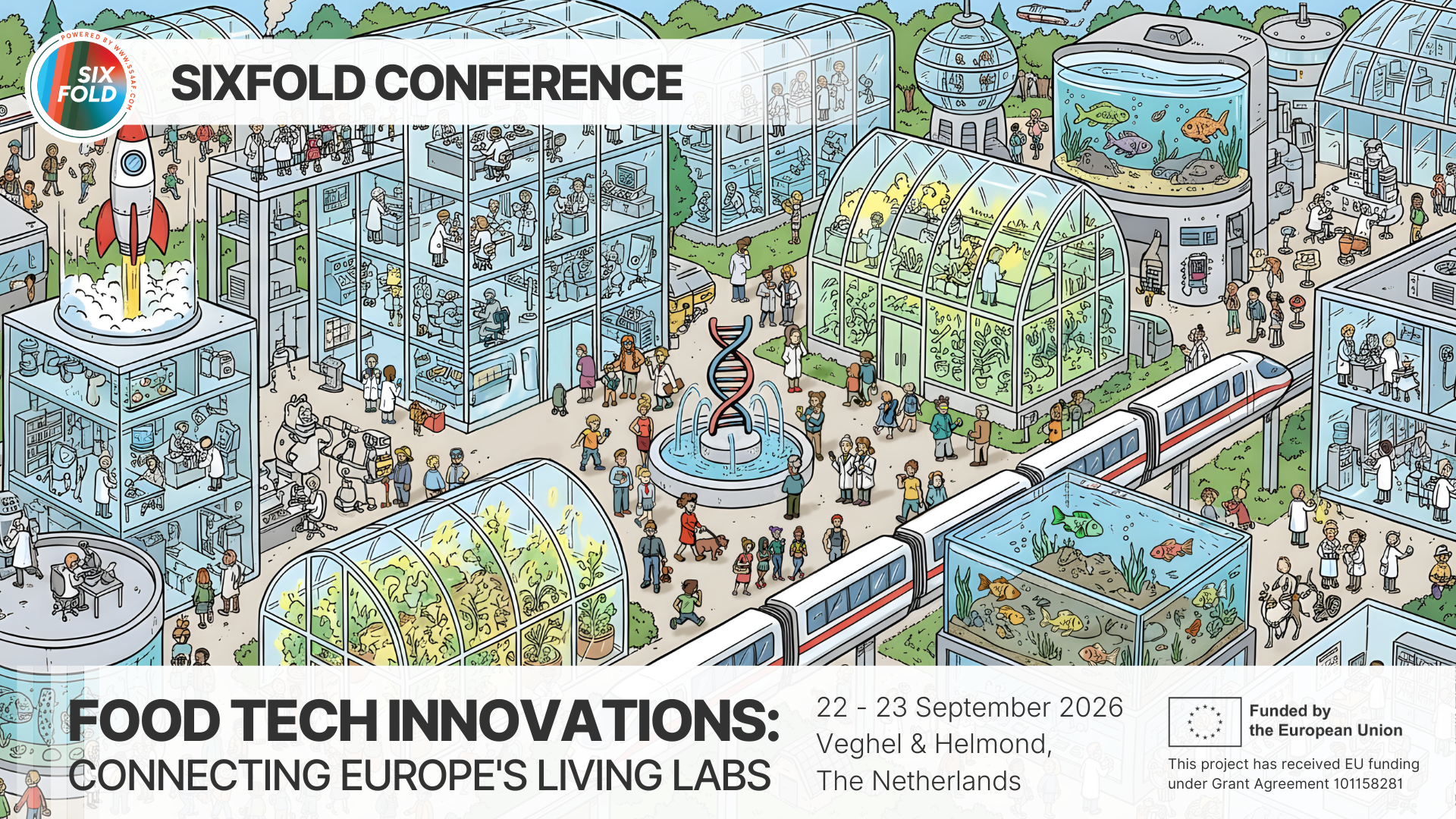
Food Tech Innovations: Connecting Europe’s Living Labs
Join us on 22–23 September 2026 in the Dutch Brainport region for the final SIXFOLD conference, Food Tech Innovations: Connecting Europe’s Living Labs. After two years of collaboration, knowledge exchange, and hands-on innovation, this closing event brings together Living Lab practitioners, researchers, policymakers, clusters, and food tech companies from across Europe to celebrate the achievements of the SIXFOLD project and explore the future of the European Food Tech Living Lab network. Through inspiring presentations, interactive discussions, networking opportunities, and visits to leading food innovation facilities, participants will discover how Living Labs can drive sustainable innovation and strengthen cross-border cooperation in the food sector. Whether you have been part of the SIXFOLD journey from the beginning or are looking to connect with Europe’s growing food tech ecosystem, this conference offers a unique opportunity to learn, collaborate, and help shape the future of food innovation in Europe.
Food Tech Innovations: Connecting Europe's Living Labs - SIXFOLD
Study visit to the Barcelona Living Lab
Transition design for complex and persistent problems of the food system: The case of food environment transformation
About the event
Join Living Labs and food system innovators from across Europe for a two-day immersive study visit hosted by the Living Lab for Health at IrsiCaixa in Barcelona. Through hands-on workshops, community visits and peer exchange, participants will explore transition design approaches for tackling complex and persistent challenges in food environments.
The visit centres on the work of the Barcelona Living Lab, which has spent years co-designing systemic change with over 100 organisations across the Barcelona metropolitan area. Their six-phase participatory process — spanning system understanding, visioning, strategising, experimenting, roadmap design and advocacy — offers a concrete and transferable model for food system transformation.
What you will do
Over two days, participants will engage in facilitated workshops applying systems thinking and transition design methods, visit community interventions being piloted in the Fondo neighbourhood, co-design recommendations for transition roadmaps, and contribute to a policy brief to be published by FoodCLIC. The programme also includes a welcome dinner on the evening of 11 May at Mescladís, a social inclusion restaurant in Barcelona, and a closing dinner at Conreu Sereny, a local food production cooperative.
Who should attend
This study visit is designed for Living Lab facilitators and coordinators, project managers, researchers and innovators working on sustainable food solutions, and representatives from agri-food companies, public authorities and the third sector — in short, anyone driving change in the food system at a local, regional or national level.
Practical information
📅 12 & 13 May 2026 (pre-event dinner on 11 May) 📍 La CIBA, Passeig de Llorenç Serra 64, Santa Coloma de Gramenet, Barcelona
A range of sustainable hotels in central Barcelona are recommended for accommodation. Travel and accommodation costs of up to €700 may be reimbursable — please consult the registration form for details.
Registration deadline: 30 April 2026
Webinar 3: Development of widely shared typology and practice-oriented guidelines for SPI in FutureFoodS
Webinar 3: Development of widely shared typology and practice-oriented guidelines for SPI in FutureFoodS
Intro: Recap of outcome of group work/webinar 1 and 2. (bringing together the Miro work to provide overview of draft typology….)
Keynote on the rationale and idea for a joint conceptual framework for SPI/SPSI as support for coherent policy formulation in Food Systems approach. Presenting a draft proposal for common principles and practice guidelines (building on the two first webinars and input on Miro board) for the discussion.
Group work aiming at discussing and developing draft common guidelines for SPIs and ideas for the development of training courses
Creating a typology of SPI/SPSI situations relevant vis-à-vis FutureFoodS
Agreeing on main principles to consider and an overall set of practice guidelines to be developed for different types of SPI.
First Ideas for training needs and course content
Plenary: bringing together the proposals from breakout groups
This webinar delivers the joint outcome of the full series. Participation in the earlier webinars is strongly recommended.
Webinar 2: Science–policy–society interface in food policy: Towards institutional and territorial coherence
Webinar 2: Science–policy–society interface in food policy: Towards institutional and territorial coherence
What are the practical implications of SPI and SPSI in a Policy context as demonstrated in three national cases?
The webinar presents 3 different national case studies – from Italy, Denmark and Belgium- with the aim of understanding how to bridge the gap in SPI with regards to food policies. The 3 case studies focus on multi-actor approaches and networking activities.
Definition of SPIS vs SPI: Are there main differences in the role of science and scientific integrity?
Italy: Bridging the gap in food policies by a transdisciplinary and multi-actor policy approach
Denmark: Science to policy interface in support of the Food Agency’s policy for transition to plant-based diets
Flanders (Belgium): Networking for the food system transition via policy-science-society interface
Guided brainstorming sessions in break-out rooms
Which factors enable or hinder effective dialogue between scientists and policymakers at different institutional levels?
What are the main elements that enable good practices for SPSI on these different institutional levels?
Can (elements of) good practices in SPSI be generalized and turned into “universal principles”, or are they fully case- and context-specific?
This webinar extends the SPI discussion towards SPSI and institutional coherence, directly shaping the content and scope of the final guidelines developed in Webinar 3 (22 April).
Webinar 1: Principles and practices of SPI in different contexts
Webinar 1: Principles and practices of SPI in different contexts
Introduction : Aim and rationale for the initiative
Keynote presentation(s) based on a FutureFoodS survey among civil servants and other recent findings as seen from research side: Different types of science advice tasks and governance of SPI, Principles and practices applied in current SPIs and challenges seen from practice
Group work in breakout sessions working in Miro to capture ideas:
Sharing concrete case examples from civil servants/researchers (e.g. from our survey respondents).
Open discussions w facilitator followed by specific questions aiming at creating mutual understanding of the variation in practices and a first version of typology of SPI and classification of principles etc.
First ideas of advantages and challenges of different types of SPI as seen by participants
This webinar establishes the baseline. Its outputs directly feed into Webinar 2 (19 March) and form essential input for the joint guidelines developed in Webinar 3 (22 April).
Webinar for applicants
A webinar will be hosted on 11th of December 2025 from 11:00 am to 13:00 CET for all interested applicants. The webinar will provide an overview of all relevant aspects of the call and a short introduction to the submission platform. The webinar is open to everyone interested and no registration is required.
The slides, the recording and FAQ document of the webinar are online on our submission website.
Autumn school 2025

Invitation: Call for applications to participate
“Future challenges and solutions for sustainable food systems”
FutureFoodS together with the Biotechnical Faculty, University of Ljubljana and the Jožef Stefan Institute, invites applications to participate in the FutureFoodS Autumn School 2025.
This three-day immersive programme brings together 15 early-career professionals, researchers, and students to explore future challenges and innovative solutions for sustainable food systems. Participants will engage in expert talks, hands-on teamwork, and site visits, while enjoying the vibrant atmosphere of Ljubljana.
Who Can Apply
The Autumn School is open to early-career attendees (up to 5 years after their most recent degree) who are residents of a FutureFoodS member country and are active in food systems beyond the farm gate.
Eligible participants include:
Students and researchers (MSc, PhD, postdocs)
Industry professionals (R&D, innovation, consulting, engineering)
Policy and public sector representatives (local, national, international)
NGOs or civil society actors (advocacy, outreach, development)
Programme Highlights
Participants will take part in an inspiring and practice-oriented programme featuring:
Interactive Expert Talks
Covering topics such as protein diversification, food waste valorisation, consumer behaviour, and innovative product development.FutureFoodS Hackathon
A multi-day challenge where teams design solutions to real-world problems and pitch their ideas to a jury.Industry & Site Visits
Visits to a local plant-based food producer and a university micro-plant to experience sustainable practices first-hand.High-Level Round Table
A closing discussion with policymakers, industry experts, and academics on the transition towards sustainable food systems.
Programme Overview
Day 1 – Foundations & Problem Framing
Welcome session and keynotes on the transition to sustainable food systems, followed by team discussions.
Day 2 – Innovation & the Hackathon
Hackathon launch, mentoring, and a visit to the university’s micro-plant. Group dinner in the evening.
Day 3 – Application & Synthesis
Visit to a local food company, final hackathon pitches, and a moderated round table on sustainable transitions.
Benefits of Participation
Selected participants will enjoy:
Free participation in the Autumn School
Covered expenses for travel, accommodation, and meals
Access to expert talks and mentoring
Hands-on innovation through the Hackathon
Networking with peers and professionals across Europe
The opportunity to explore the beautiful city of Ljubljana
Application Requirements
Applicants must submit the following via the online application form by 23 October 2025:
Short CV (max. 1 page)
Letter of reference (from academic supervisor or employer)
Motivation letter (max. 2 pages) explaining:
Why you wish to attend
Your current work or research focus
What you hope to gain and contribute
How the Autumn School fits your academic/professional goals
📎 Apply here: https://1ka.arnes.si/FutureFoodsSchool
Key Dates
Application deadline: 23 October 2025
Notification of acceptance: 26 October 2025
Autumn School: 19–21 November 2025
(Travel days: 18 & 22 November 2025)
Don’t miss this opportunity to learn, connect, and innovate with peers from across Europe working towards the transformation of our food systems!
FUTUREFOODS - WORKSHOP
FutureFoods workshop on Research-based advice to policy makers in support of sustainable food systems transition
Webinar – Friday, May 23, 10:00 AM – 12:00 PM
In many countries and regions across Europe research contributes to policy making by providing research-based advice to policy makers/civil servants under different forms. This is especially challenging in supporting sustainable food systems transition because of the need for policy coherence across multiple policy areas and stakeholder interests.
Therefore, FutureFoodS partners will co-develop improved practices for provision of research-based advice to policy makers based on exchange of experiences among peers. Moreover, we aim to establish collaboration across EU in providing research-based advice to policy makers at national and sub-national levels. This may be based partly on the knowledge gained from the research and innovation in food systems under FutureFoodS, Food2030 and other programs.
We wish to engage civil servants – as users of science advice – and researchers providing research-based advice for their national/regional/local competent authorities across the member countries in the co-creation of new so-called Science Policy Interfaces.
We therefore invite you to the first in a series of workshop events, taking place as a webinar on Friday, May 23, from 10:00 AM to 12:00 PM.

Why participate?
To exchange experiences and ideas among peers involved in producing, translating, requesting or receiving and using research-based advice in support of policy making in areas relevant to sustainable food systems transition.
To contribute to the improvement of science-policy interfaces in complex policy areas, to develop a Food System approach in policies (policy coherence)
To understand and discuss the challenges of implementation of a Food System approach in policies
To enhance European collaboration in improving and producing research-based advice for improved quality and efficiency.
Registration
If you are interested and available to attend, please register by May 12 using the following link: 👉 https://forms.gle/spDNUyAoVuy9Roez8
We aim to ensure a balanced participation of researchers and civil servants/policymakers to make the discussion as fruitful as possible.
Thank you for your collaboration! We look forward to welcoming you on May 23!
Webinar for interested applicants
A webinar will be hosted on 21st of November 2024 from 11 am to 13 CET for all interested applicants. The webinar will provide an overview of all relevant aspects of the call and a short introduction to the submission platform. The webinar is open to everyone interested and no registration is required.
More information to the webinar:
The slides are available via this link. The Q&A session will be made available online later.

Kick-off meeting
On June 19 2024, more than 100 research and innovation experts convened in Dijon to help support the transition to sustainable food systems by sharing insights, initiatives and joining forces within this partnership.

The kick-off meeting was organised by The French National Research Agency (ANR) and German Federal Office for Agriculture and Food (BLE). Special thanks to John Bell of the European Commission, Akiko Suwa-Eisenmann from the United Nations, and all the panellists of the round table representing related initiatives (SCAR, CLEVERFOOD, AGROECOLOGY, WATER4All, ERA4Health) that also contribute to the FutureFoodS partnership.