
FoodEnvironments4Future
Future-proof school-centric food environments
Introduction
FoodEnvironments4Future is a European research and innovation project that aims to create healthier, more sustainable, and more inclusive food environments for children and young people. Bringing together youth, schools, researchers, municipalities, policymakers, civil society organisations, and commercial actors, the project co-develops practical solutions that encourage healthy eating habits and sustainable food choices.
While schools accross Europe are increasingly expected to promote healthy and sustainable diets, they often operate within food environments that reinforce less healthy and less sustainable behaviours. As a result, public school meal systems, and catering companies as well as school chefs often struggle to compete with the wider commercial food environment surrounding schools. Through local innovation labs in six European countries and policy collaboration at local, national, and EU levels, FoodEnvironments4Future seeks to address these challenges and strengthen the capacity of schools and communities to support positive food choices.


Food environments, Youth participation, Sustainable food systems, school, Innovation labs, Food system transformation; Policy development; Co-creation; Public health; Sustainability; Governance; Participatory research; Food policy
2026-2029
TRL: 6
Background
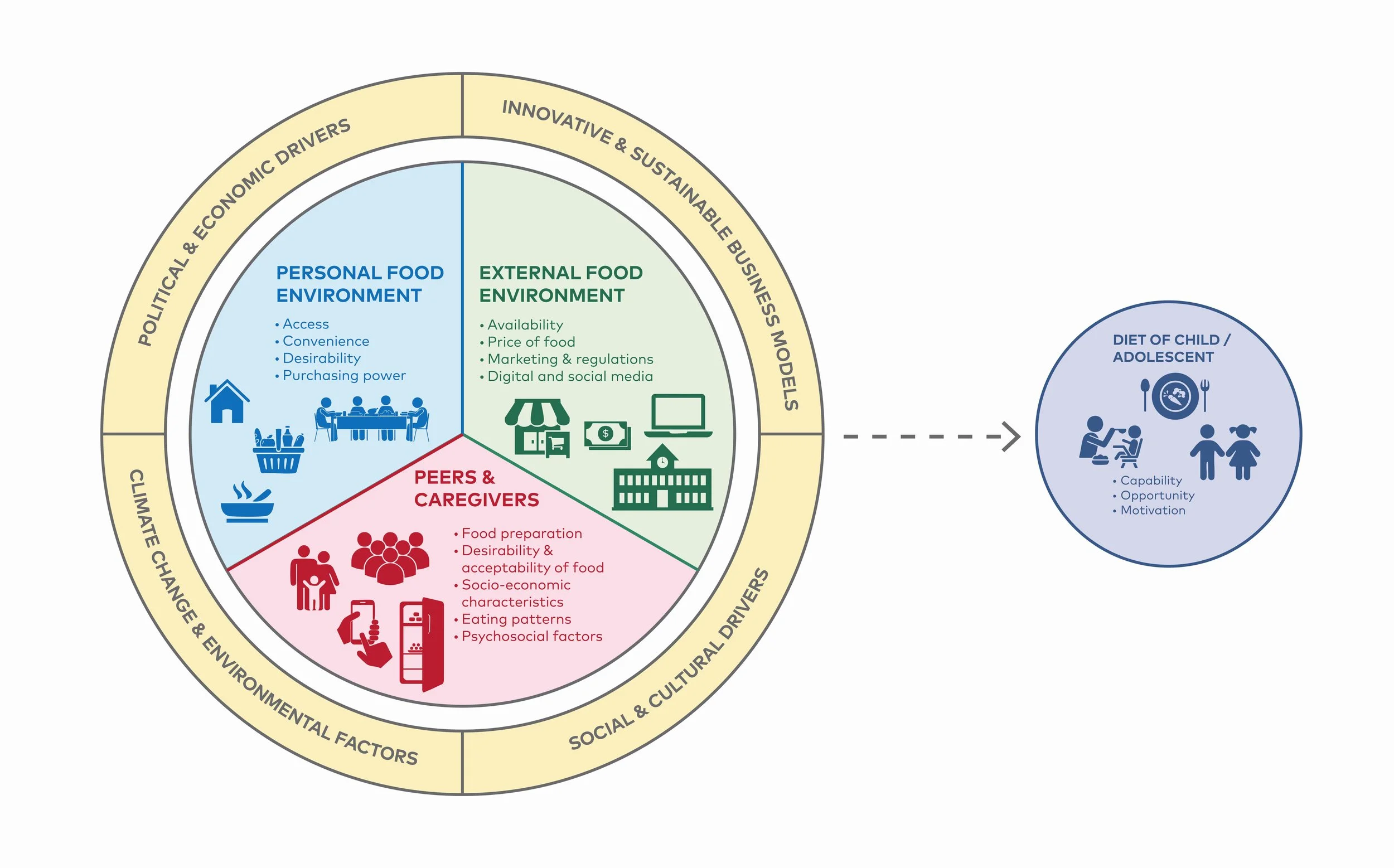
Across Europe, young people are increasingly exposed to food cues and everyday food environments that promote unhealthy diets and unsustainable consumption patterns. Food choices are shaped not only by personal preferences or knowledge, but also by school settings, food and vendor availability, digital marketing, social norms, and economic conditions.
At the same time, schools, municipalities, and policymakers often lack practical tools and tested approaches to improve food environments together with youth and local communities.
FoodEnvironments4Future addresses these challenges through participatory research, youth engagement, innovation labs, and policy dialogue. The project explores how healthier and more sustainable food environments can be co-designed together with young people while supporting long-term food systems transformation.
By connecting local experimentation with national and EU-level collaboration, the project aims to develop solutions that can be scaled and adapted across Europe.
What we do
Mapping physical and digital food environments in and around schools.
Engaging youth in participatory mapping, workshops, and future visioning activities.
Testing practical interventions through local innovation labs.
Exploring how commercial food environments influence young people’s food choices.
Facilitating collaboration between schools, municipalities, researchers, commercial businesses, and civil society.
Organising national and EU-level policy dialogue through Accelerator Groups.
Producing policy recommendations, scientific publications, and practical guidance materials.
Sharing results through workshops, webinars, conferences, exhibitions, and digital communication.
Expected impact on food system transformation
FoodEnvironments4Future contributes to the transition towards healthier and more sustainable food systems by empowering young people and local stakeholders to shape the food environments around them. Through participatory mapping, co-creation activities, and innovation labs, the project develops and tests practical solutions that promote healthy eating habits and sustainable food choices, including organic and plant-rich options.
The project’s ‘Theory of Change’ is linking local experimentation with broader policy development and systems transformation. Experiences and evidence generated through the innovation labs will support future policy recommendations and practical implementation at local, national, and EU levels.
The project is expected to strengthen youth participation and engagement, increase collaboration across sectors, and provide new knowledge on how food environments can better support both human and planetary health.
Implementation and plans to reach target groups
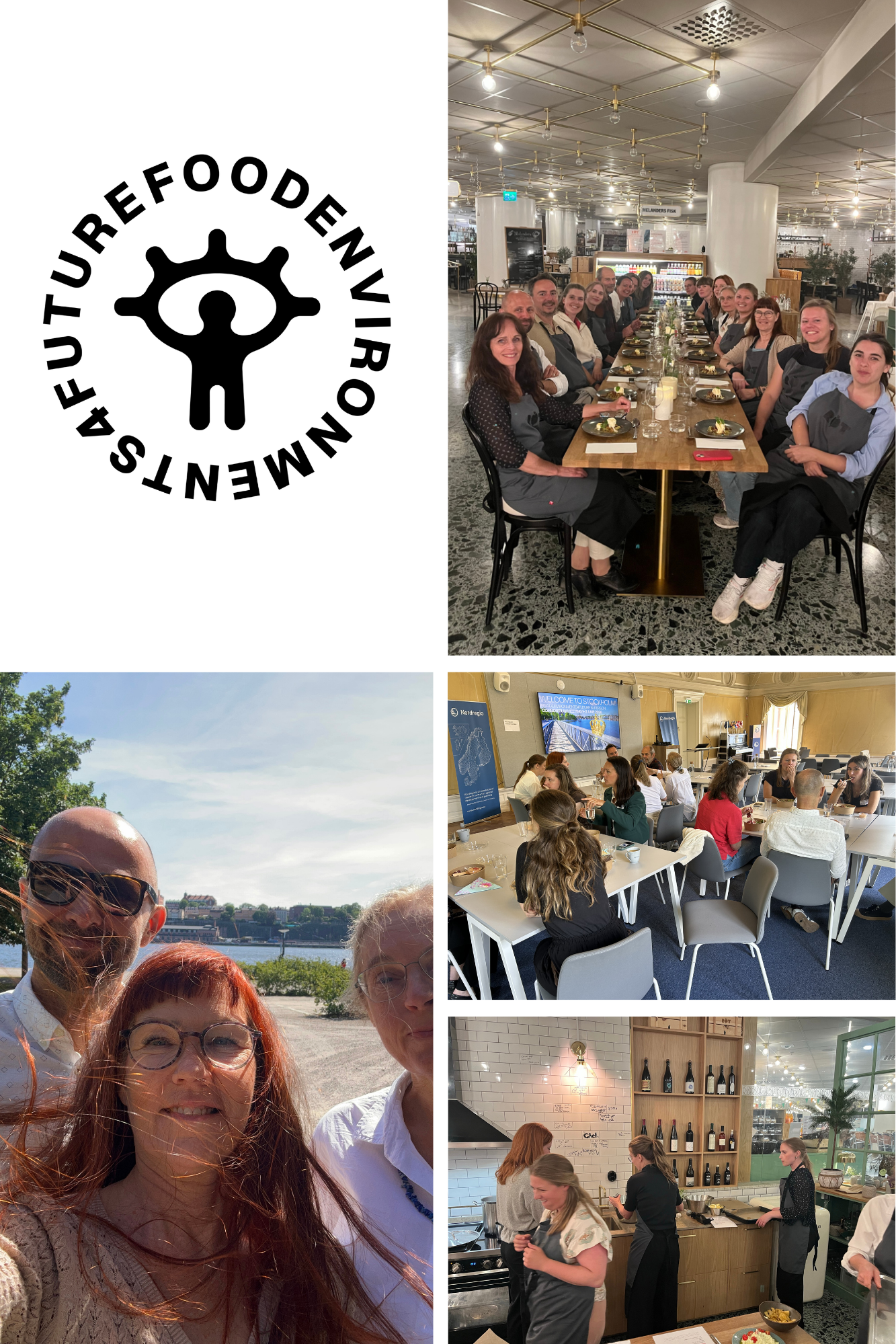
The project uses a participatory and multi-stakeholder approach involving youth, schools, municipalities, researchers, policymakers, civil society organisations, and commercial actors.
Young people are central to the project and participate in mapping activities, workshops, foresight exercises, and innovation labs where future food environment solutions are co-created together with local stakeholders.
Schools and kitchen staff are engaged through practical workshops, peer-learning activities, and local innovation processes. Commercial actors such as retailers, caterers, and food companies participate in dialogue sessions and collaborative testing of practices with the potential to promote healthier and more sustainable food choices.
National Accelerator Groups and an EU-level Advisory Group support policy dialogue and help translate project findings into policy recommendations.
Results and experiences will be shared through a project website, newsletters, webinars, policy briefs, scientific publications, conferences, exhibitions, and media outreach.
Partners of the project
-
Ulrika Backlund, WWF Sweden, Sweden
Mail: ulrika.backlund@wwf.se
-
WWF Sweden – Sweden
Nordregio – Sweden
Organic Sweden – Sweden
Vejle Kommune / Culinary Institute by Vejle Erhverv – Denmark
KU Leuven (Media, Information and Persuasion Lab) – Belgium
Rikolto Belgium – Belgium
Erasmus University Medical Center Rotterdam – The Netherlands
Speiseräume – Büro für angewandte Ernährungspolitik gGmbH – Germany
Zorgtraiteur Claessens André – Belgium
Foodatelier César – Belgium
University of Alcalá – Spain
-
Vinnova (Swedish Innovation Agency) – Sweden
FWO (Research Foundation – Flanders) – Belgium
FIO/VLAIO (Flanders Innovation & Entrepreneurship) – Belgium
NWO (Dutch Research Council) – The Netherlands
BMEL (Federal Ministry of Food and Agriculture) – Germany
AEI (Agencia Estatal de Investigación / State Research Agency) – Spain
IFD (Innovation Fund Denmark) – Denmark
-