
HARMONI
Hybrid Alternatives for Redefining Meat
Introduction
To address the growing environmental impact of food production, sustainable alternative protein sources are essential to meet rising global demand. The HARMONI project aims to develop a comprehensive knowledge toolbox for hybrid products that combine the benefits of cultivated and plant-based meat alternatives, enabling the creation of appealing new food concepts and expanding future food choices.
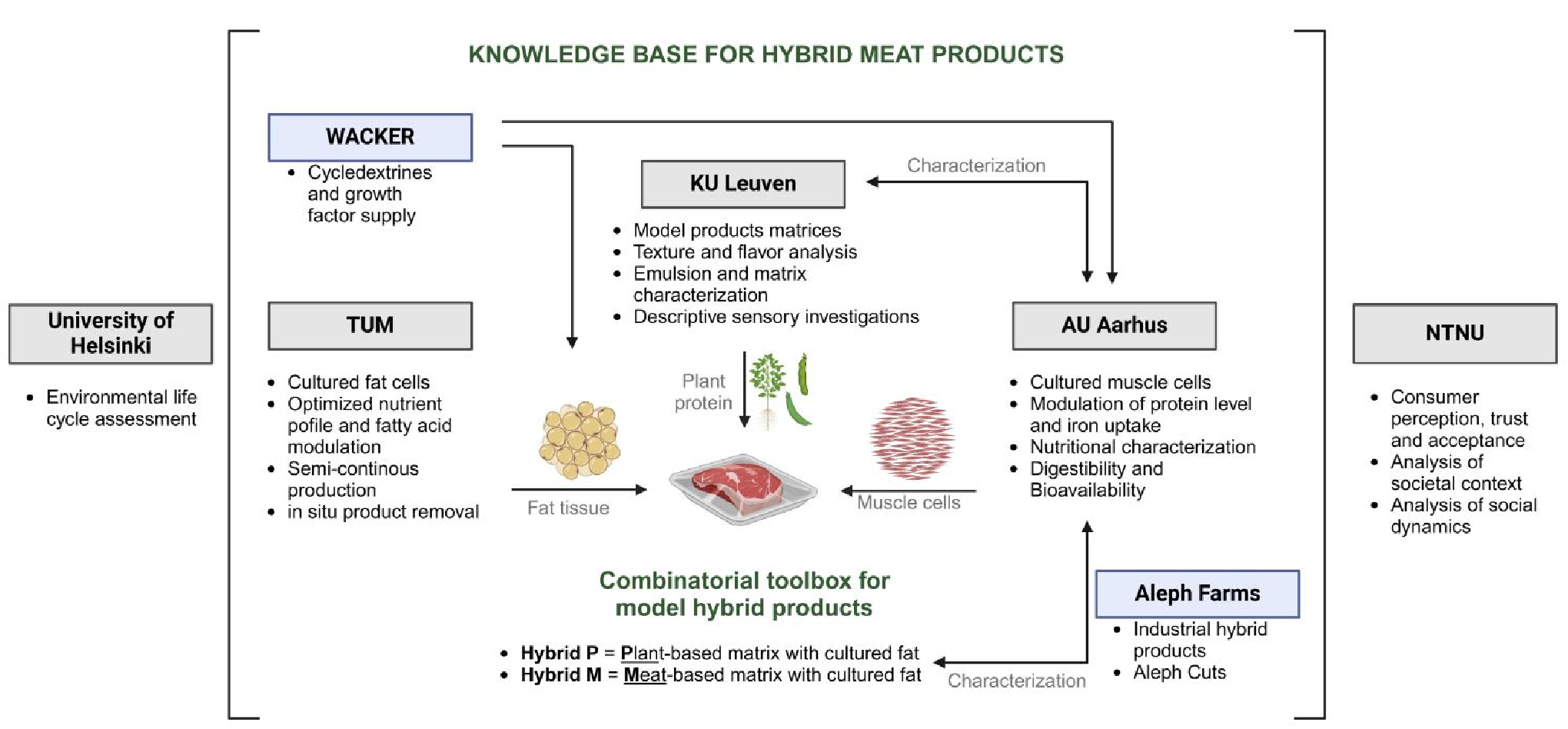
To achieve this, HARMONI brings together a consortium of leading European experts in Cellular Agriculture and Bioprocess Engineering (Technical University of Munich, TUM), Meat Science, Cultivated Muscle Cells and Nutrition (Aarhus University AU), Material Science and Microbial Systems (Katholieke Universiteit Leuven KUL), Sustainable Food Systems (University of Helsinki UH), and Environmental and Consumer Psychology (Norwegian University of Science and Technology NTNU), complemented by leading industrial partners (Figure 2).
Figure 1: Graphical abstract of project HARMONI, visualizing the partners and individual key tasks to create a knowledge base for hybrid meat products.



Cellular Agriculture, cultivated meat, hybrid food solutions, cell-based, nutrient-enhanced, consumer acceptance, sustainability
2026-2029
TRL: 3-4
Background
Food production through conventional farming, especially animal husbandry, places considerable strain on the environment. This cannot be sustained as the world population grows, putting food security at risk. At the same time, e.g., beef is rich in saturated fatty acids, which are linked to an increased risk of cardiometabolic diseases. ‘Changing the way we eat’ thus becomes a crucial goal, one that can be supported through the transition to plant-based meat alternatives (PBMAs) and cultured meat (CM). However, PBMAs often lack in taste, texture, and nutritional value and replicating the sensory properties of meat remains a key hurdle in fully substituting meat with plant-based alternatives. CM, closer to conventional meat, faces challenges such as low acceptance, high costs, processing difficulties, and scalability.
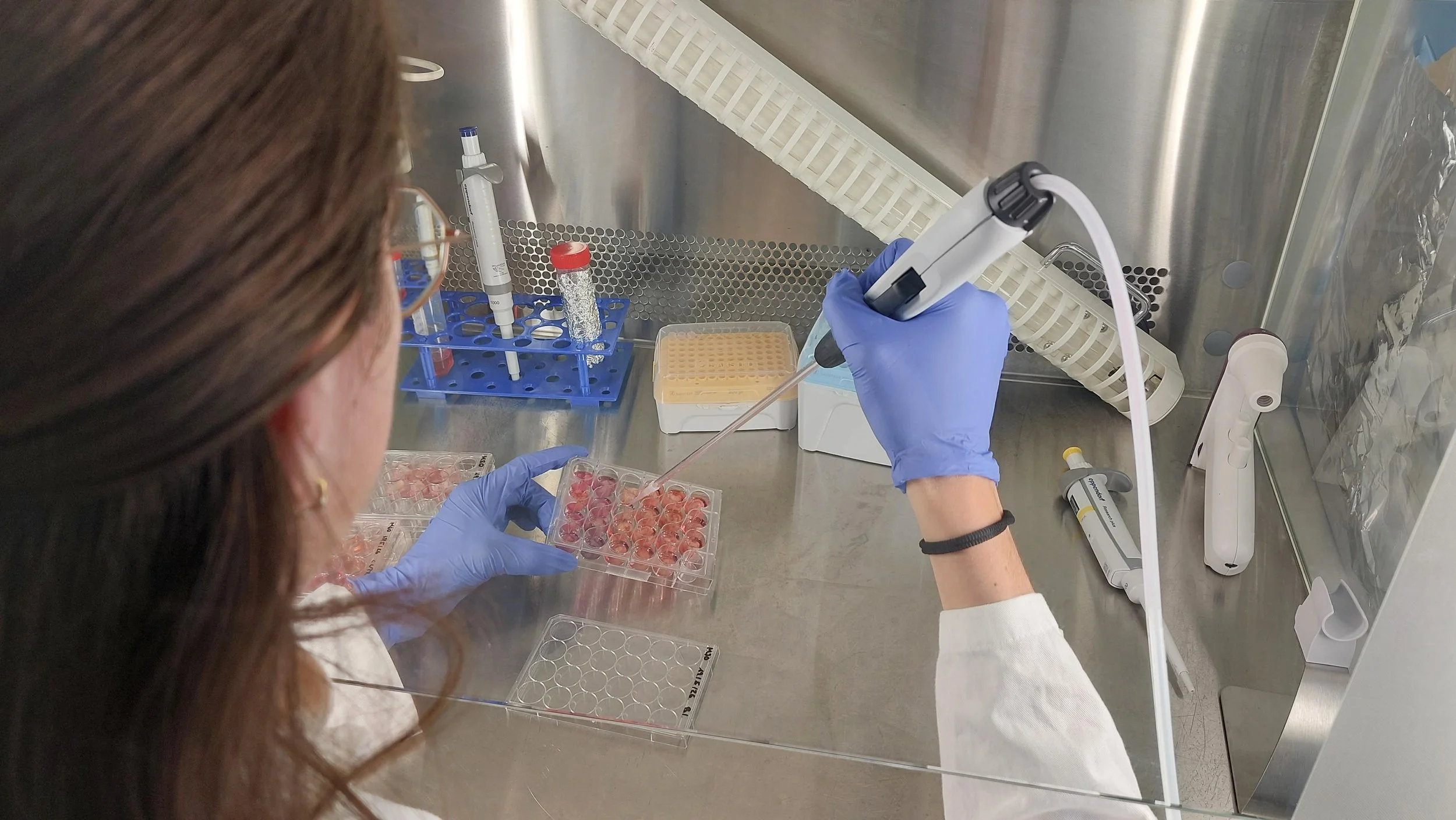
PhD-student Yasmina Harsy performing a cell viability assay. Photographer: Georg Zagelmair
What we do
Cultivation of adipocytes in 3D on microcarriers under optimized conditions
Modulation of the lipid profile to increase nutritional value or mimic native flavor
Cultivation of muscle cells to evaluate and maximize protein quality
Investigation of biochemical pathways and metabolites in cultured myofibres to determine iron bioavailability
Development and benchmarking of hybrid product matrices incorporating cultured fat to simulate traditional meat products, such as sausages
Assessment of the environmental impact of cultured meat products (muscle cells, fat cells, hybrid products) using Life Cycle Assessment (LCA) to improve sustainability
Design of assessment strategies to provide continuous feedback on developed hybrid products to ensure consumer acceptance
Expected impact on food system transformation
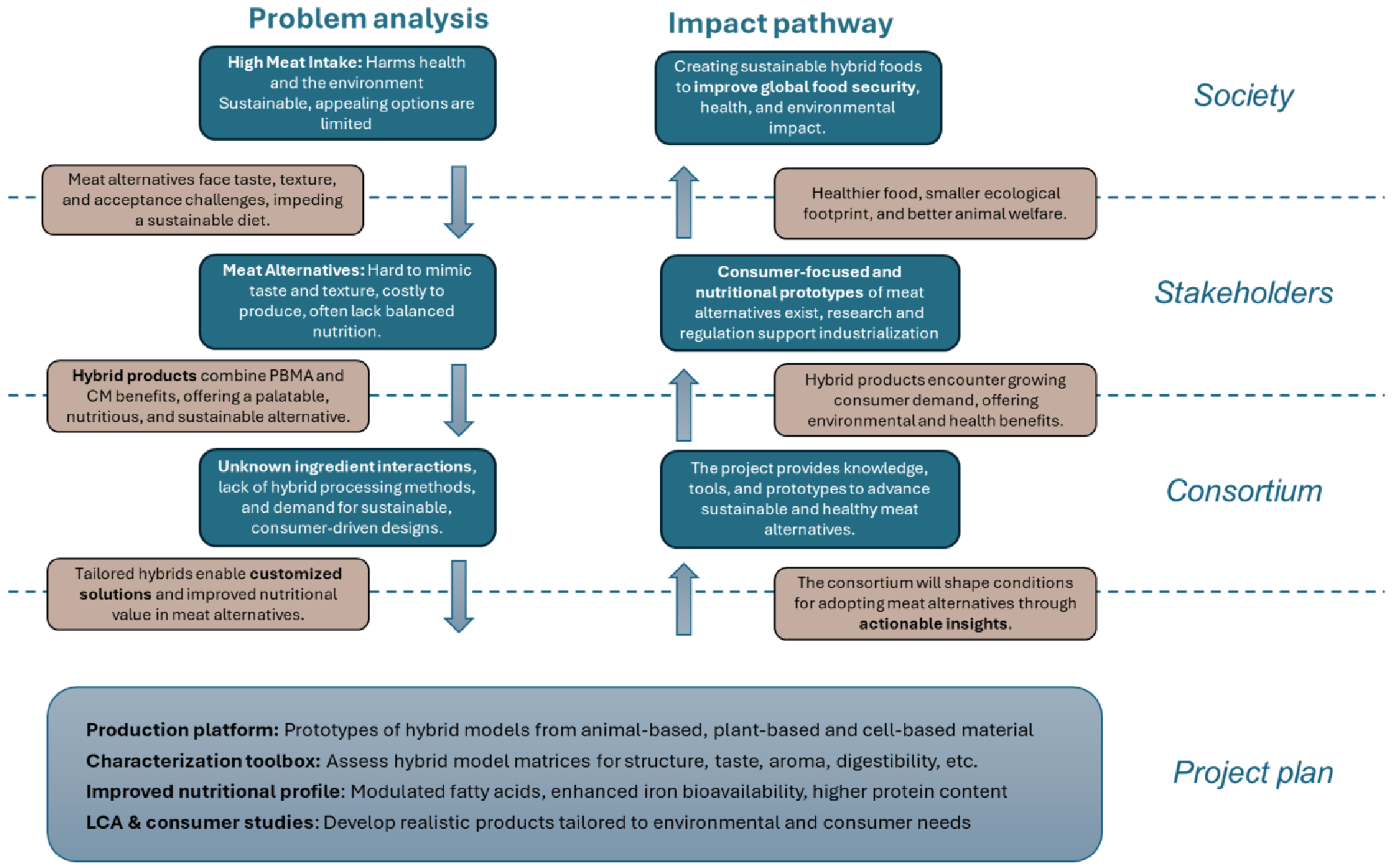
High meat consumption leads to nutrition-derived diseases and a high environmental strain. Hybrid products offer a promising solution to combine the advantages of current meat alternatives by incorporating cell-based materials (muscle and/or fat) into a plant-based matrix, thereby fostering more palatable, nutritious products. Scientifically, a comprehensive overview of processing methods, ingredient interactions, and characterization of hybrid products is not yet available. To ensure the success of hybrid products, consumer preferences are integrated in a co-design process. The project thus transforms the way hybrid products are designed towards a methodology, anticipating and removing potential barriers on the consumer side to create meat alternatives that foster global food security (Figure 2)
Implementation and plans to reach target groups
The project has developed a dissemination, exploitation, and communication (DEC) plan including key target groups (industry, scientific community, consumers, and authorities/policy makers), and means for communicating and maximizing impact from interaction with each of these groups. The main objectives of this work will be to ensure open and high-impact dissemination of data, transfer of knowledge and methodology to industry, inclusion of the public in outreach and co-creation activities, and input to new policies related to sustainable food production.
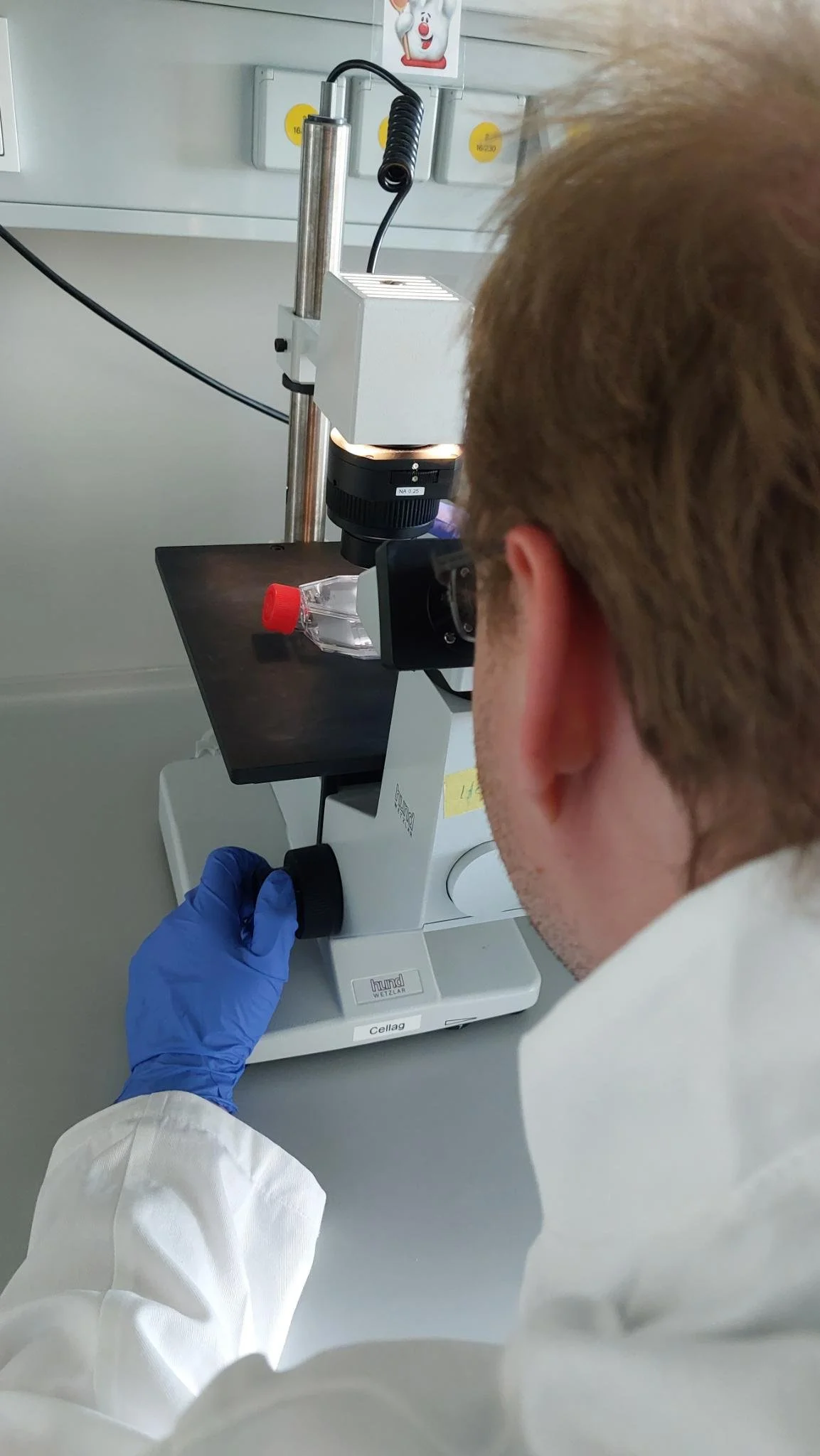
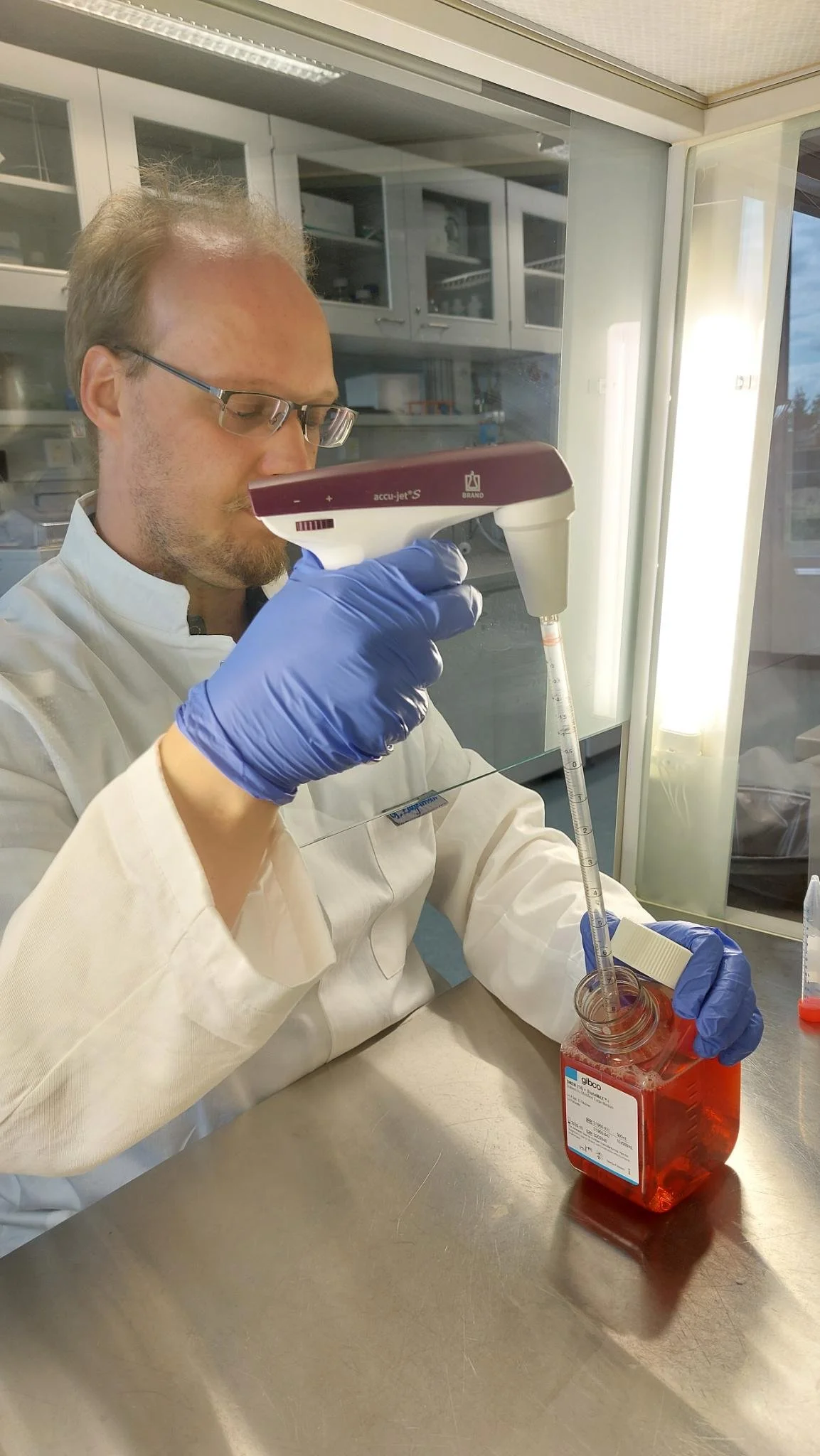
PhD-student Georg Zagelmair preparing medium and imaging cells. Photographer: Laurenz Köhne
Partners of the project
-
Prof. Dr.-Ing. Marius Henkel, Technical University of Munich
Mail: Marius.henkel@tum.de
-
Prof. Dr. Jette Feveile Young, Aarhus University AU, Denmark
Prof. Dr. Ilse Fraeye, Katholieke Universiteit Leuven KUL, Belgium
Prof. Dr. Hanna Tuomisto, University of Helsinki UH, Finland
Prof. Dr. Christian A. Klöckner, Norwegian University of Science and Technology NTNU, Norway
Dr. Carsten Bornhövd, Wacker Chemie AG, Germany (associated Partner)
Dr. Neta Lavon, Aleph Farms, Israel (associated Partner)
-
Federal ministry of Research, Technology and Space/Bundesministerium für Forschung, Technologie und Raumfahrt (BMFTR, Germany)
Innovation Fund Denmark/Innovationsfonden (INNOFOND, Denmark)
Fond for Scientific Research Flandern/Fonds Voor Wetenschappelijk Onderzoek-Vlaanderen (FWO, Belgium)
Ministry of Agriculture and Forestry/Maa- ja metsätalousministeriö (MMM, Finland)
The Research Council of Norway/Norges Forskningsrad (RCN, Norway)