Throwback to the Autumn School
In November 2025, Ljubljana hosted a dynamic three-day Autumn School that brought together early-career professionals, researchers, and students eager to deepen their expertise in food innovation, sustainability, and emerging technologies. Organized by FutureFoodS in cooperation with the Biotechnical Faculty of the University of Ljubljana and the Jožef Stefan Institute, the programme offered 15 participants an intensive exploration of future challenges and innovative solutions for sustainable food systems. From expert lectures to hands-on teamwork and site visits, attendees engaged with pressing topics such as alternative proteins, food waste valorisation, green processing technologies, and circular economy approaches — all within the vibrant setting of Slovenia’s capital. This event stood out as a rich blend of knowledge sharing, practical learning, and real-world application.
Day 1 – Deep Dive into the Fundamentals
The first day set the stage with an inspiring lecture from Maarten Uyttebroek of Flanders’ FOOD, introducing the FutureFoodS Partnership, Knowledge Hub, and Living Labs. He explained how a systemic, collaborative approach is crucial to transforming Europe’s food systems. The following talks expanded on the interconnected aspects of sustainability, offering both theory and practical insights.
Lenka Kouřimská from Czech University of Life Sciences Prague kicked off the technical talks, presenting an innovative overview of sustainable food systems, while Jelena Milešević from CENM IMR, Serbia explored the growing potential of alternative protein sources.
Other lectures included:
Vera Neužil-Bunešova (Czech University of Life Sciences Prague) addressing the critical links between health and food systems
Maša Knez Marevc from University of Maribor, who discussed the role of green processing technologies in sustainable food production
Luciana Di Gregorio from ENEA, Italy, shedding light on the integration of circular economy principles in the agri-food sector
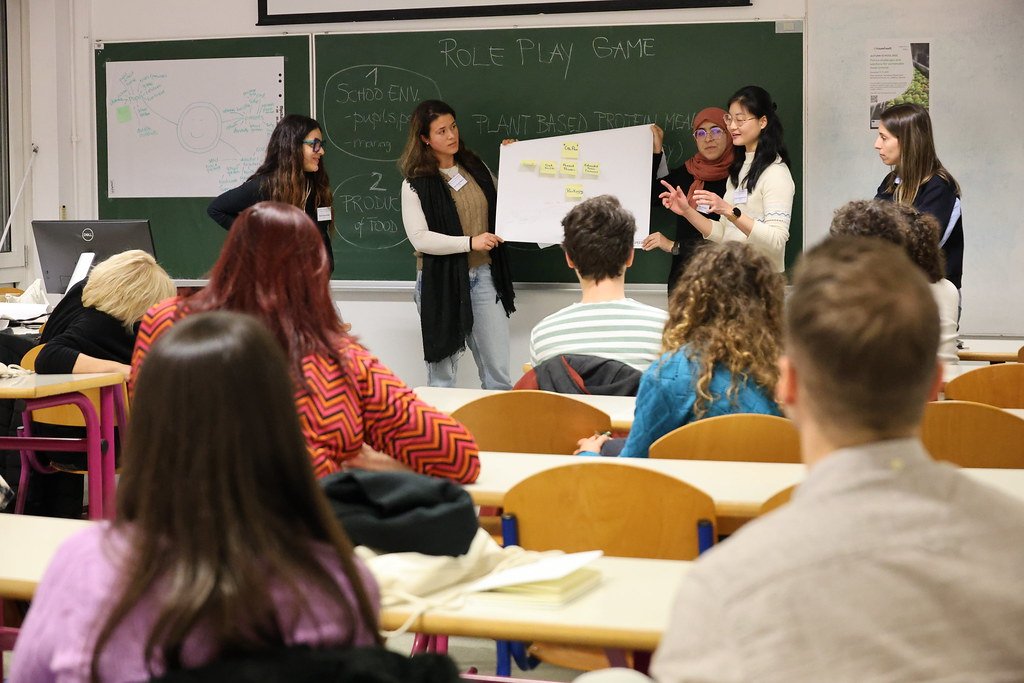
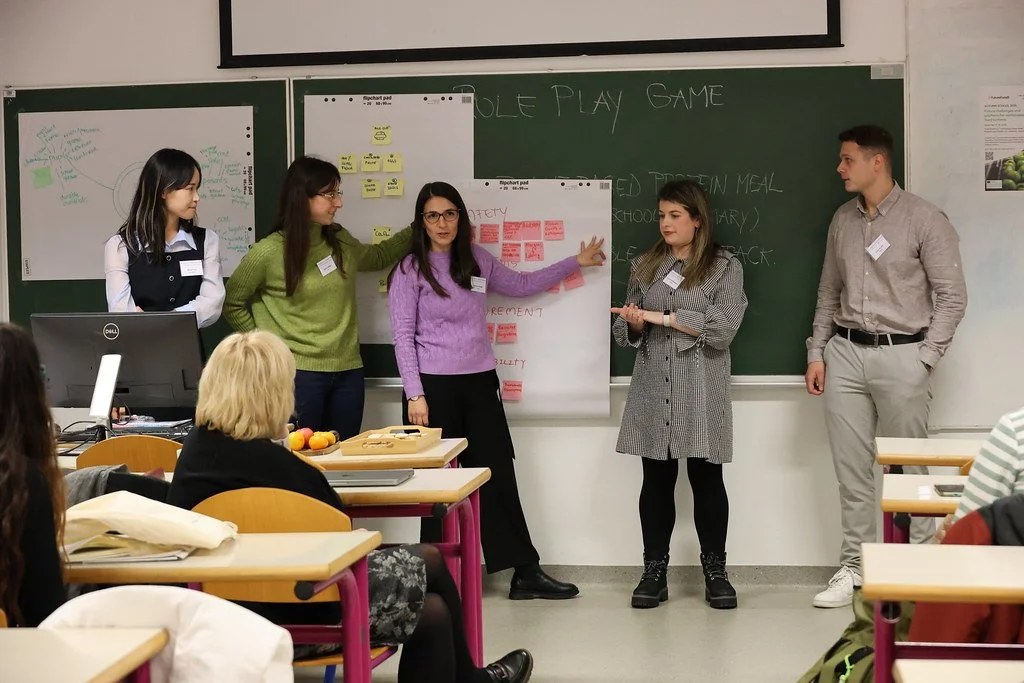
The day culminated in a thought-provoking challenge where participants were divided into teams representing three key stakeholders: food producers, consumers, and policymakers. Their task? To tackle the complexities of balancing profitability, health, environmental impact, and social acceptance – especially when it came to sourcing alternative proteins and designing recyclable packaging.
Day 2 – Real-World Insights and Innovation
The second day kicked off with a lecture from Thom Achterbosch of Wageningen University and Research (WUR), introducing the FutureFoodS Observatory. This tool provides invaluable data for tracking progress toward sustainable food systems across Europe.
Next, Nina Dremelj from Vesna Venture Capital gave participants an inside look into the world of business angels, explaining how private investors play a crucial role in funding early-stage innovations in the agri-food sector.
The day also included a fascinating site visit to the UL.BF micro plant for insect bioconversion, where participants observed firsthand how Black Soldier Fly larvae are used to convert organic waste into high-value protein and fat – critical components for sustainable feed solutions.
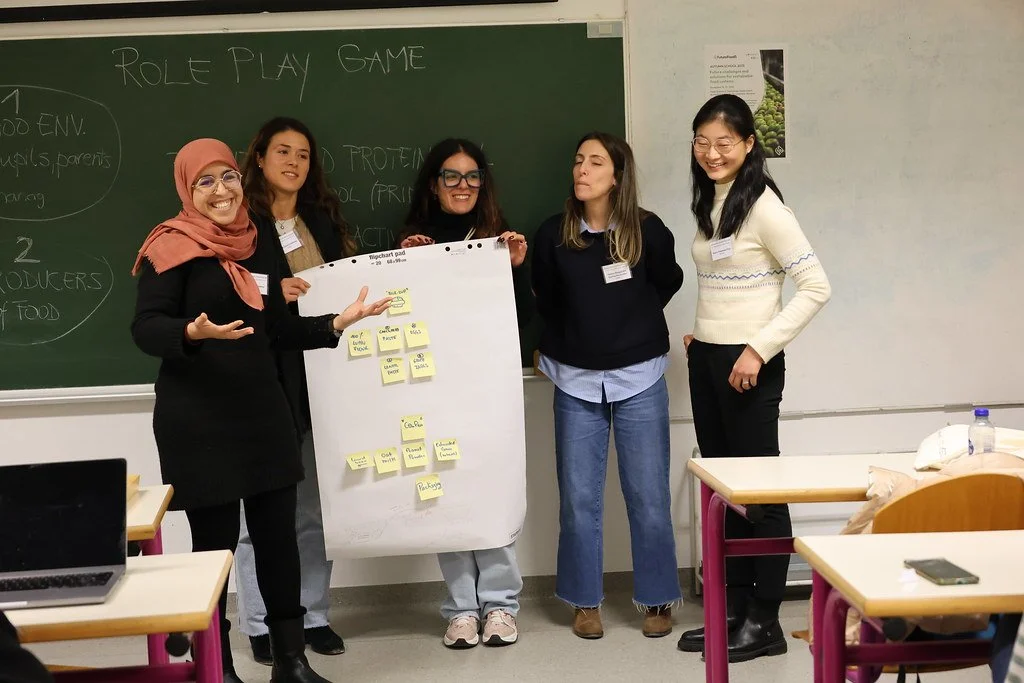
The rest of the day was dedicated to Hackathon, where participants were engaged in intensive, time-boxed work to brainstorm, develop, and prototype solutions related to the overarching topic of the FutureFoodS Partnership: sustainable and resilient food systems.
Day 3 – Integrating Knowledge and Developing Solutions
The final day of activities provided a powerful synthesis of the entire program, moving from a real-world business case by visiting a food company Grashka plant-based deli, to hands-on solution development in Hackathon and culminating in a high-level strategic discussion on the transition to sustainable food systems.
A key highlight of the day was a round table discussion featuring distinguished experts, offering participants the opportunity to engage in a high-level dialogue on the transition to sustainable food systems. The panel included:
Ana Frelih-Larsen, Ministry of Agriculture, Forestry and Food
Aleš Kuhar, agrarian economist and mentor to food start-ups, UL-BF
Matjaž Červek, Emona Nutrition R&D
Their insights sparked rich debate on the challenges and opportunities that lie ahead for Europe’s food systems, bridging perspectives from policy, academia, and industry.